The Loudest Weekend of the British Summer
The August bank holiday of 2026 is shaping up to be the single loudest weekend in the UK calendar. Reading and Leeds Festival runs from 27 to 30 August, Creamfields takes over Daresbury across the same four days, and Notting Hill Carnival — Europe's biggest street festival, with its famous static sound systems — fills west London on 30 and 31 August. Between them, well over a million people will spend hours standing in front of speaker stacks pushing out sound at levels their ears were never designed to withstand.
Most of them will give no thought at all to their hearing. That is a mistake, and the evidence for it is mounting. A report published by the charity Tinnitus UK in early 2026 found that nine in ten music fans have experienced tinnitus symptoms — ringing, buzzing or hissing in the ears — after attending live events. The charity described the finding as a "wake-up call" for the live music industry and for audiences alike. Temporary ringing after a gig is not a harmless quirk of a good night out; it is your auditory system telling you that the delicate structures of your inner ear have been pushed beyond their limits.
The good news is that none of this requires you to stay home, stand at the back, or experience the headliner through a wall of muffled cotton wool. Modern hearing protection is discreet, inexpensive and — crucially — designed to preserve the quality of the music while stripping out the harmful intensity. This guide covers how loud UK festivals actually are, which type of ear protection to choose, the habits that make the biggest difference on the day, and what to do if your ears are still ringing when you get home.
How Loud Is a Festival, Really?
Sound intensity is measured in decibels (dB), and the scale is logarithmic — every 3dB increase represents a doubling of sound energy. That mathematical quirk is what makes festival sound so deceptively dangerous: the difference between 100dB and 110dB is not "a bit louder", it is roughly ten times more acoustic energy hitting your cochlea.
Under the Control of Noise at Work Regulations 2005, UK employers must take action when workers are exposed to average levels of just 85dB, because sustained exposure at that level is proven to cause permanent damage. For context, here is where live events sit on the scale:
- 60–70dB: Normal conversation, background music in a bar.
- 85dB: The legal action threshold for workplace noise — roughly the level of heavy traffic.
- 95–100dB: A typical festival crowd area mid-set. Safe exposure time before damage risk: around 15 minutes without protection, according to World Health Organization guidance.
- 105–110dB: Front-of-stage at a major festival, or close to a carnival sound system. At 110dB, unprotected exposure of less than two minutes can begin to cause harm.
- 120dB+: Directly beside a speaker stack. Pain threshold territory, where even very short exposure is hazardous.
Damage happens in the cochlea, the fluid-filled spiral of the inner ear lined with thousands of microscopic hair cells that convert vibration into the electrical signals your brain hears as sound. Intense noise physically flattens and shears these hair cells. Some recover after a night's rest — which is why hearing often feels "back to normal" the next day — but many do not, and human cochlear hair cells do not regenerate. Every unprotected festival weekend spends a little more of a finite reserve. This cumulative, irreversible process is what audiologists call noise-induced hearing loss, and the Health and Safety Executive estimates around 170,000 people in the UK already live with it from occupational exposure alone. Leisure noise is now adding a second wave: the WHO warns that over a billion young people worldwide are at risk of preventable hearing loss from loud entertainment venues and personal audio devices.
Choosing Your Ear Protection
Not all earplugs are created equal, and the reason many people refuse to wear them — "it ruins the sound" — is usually because they have only ever tried the wrong kind. There are four main options, and the right one depends on your budget, how often you attend loud events, and who you are protecting.
Foam earplugs: cheap, effective, but muffled
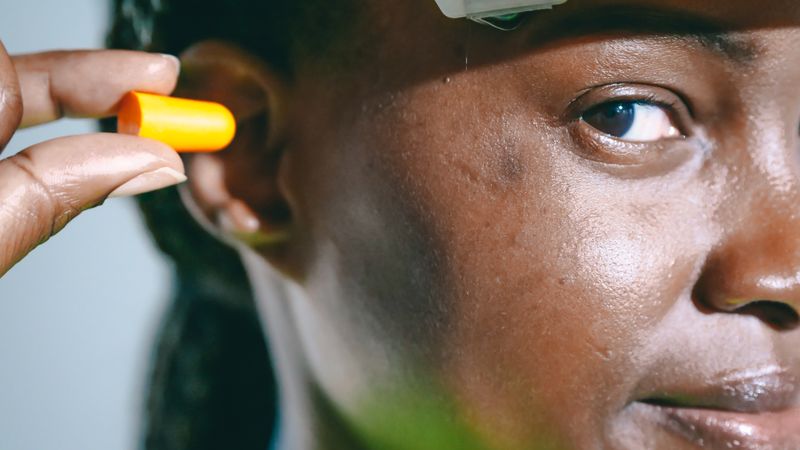
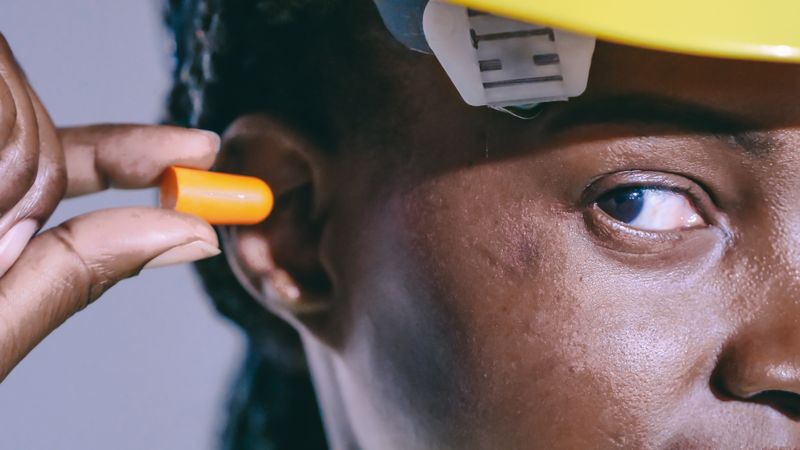
The squashy foam plugs sold in every chemist for a couple of pounds reduce noise by 20–30dB when inserted properly — rolled tight, pulled ear upward, and held in place while they expand. Their weakness is that they attenuate high frequencies far more than low ones, which is why music through foam sounds boomy and smothered, and why people pull them out halfway through the second song. They remain vastly better than nothing, and many festivals now stock free foam plugs at welfare tents and front-barrier dispensers. If you take one thing from this article, let it be this: free foam plugs beat bare ears every single time.
Filtered "musician's" earplugs: the festival sweet spot
Reusable filtered earplugs — widely available online and on the high street for roughly £10–£30 — use an acoustic filter rather than solid foam. The filter reduces volume across all frequencies relatively evenly, typically by 15–20dB, so the mix stays balanced: vocals stay crisp, basslines stay defined, and conversation with friends remains possible. For the average festival-goer attending a handful of loud events a year, these represent the best value in hearing protection. They come with silicone tips in multiple sizes, fit discreetly enough to be invisible in photos, and last for years if kept in their case.
Custom-moulded earplugs: for the dedicated
If you attend gigs monthly, work in live music, or DJ, custom-moulded attenuators are worth the investment. An audiologist takes an impression of your ear canal and manufactures plugs with interchangeable filters (typically 9dB, 15dB and 25dB) matched precisely to your anatomy. Expect to pay £130–£200. The fit eliminates the pressure points and slow migration that cheaper plugs suffer over a long day, and the sound quality is close to transparent. Our guide to hearing protection for musicians covers these in detail.
Ear defenders for children
Children's ears are not small adult ears — their ear canals are shorter, which means the same sound arrives at the eardrum at a higher effective intensity, and earplugs are both a poor fit and a choking hazard for the youngest. If you are taking children to Carnival, a fireworks display or a family festival day, over-ear defenders are essential, not optional. Look for a certified Single Number Rating (SNR) of at least 25dB and a padded, adjustable band. Babies and toddlers should ideally not be in high-volume areas at all, even with defenders — parade routes and park perimeters are far safer than the ground directly in front of a sound system.
Worried about your hearing after a loud summer?
Enter your postcode to compare local audiologists and book a hearing test today.
Find appointments →Smart Habits That Protect You on the Day
Earplugs are the headline act, but where you stand and how you pace yourself matter almost as much. Sound intensity falls away rapidly with distance — stepping back even ten metres from the speaker stacks can reduce your exposure by several decibels, which on a logarithmic scale is a substantial saving over a ten-hour day.
Practical strategies that audiologists consistently recommend:
- Avoid the speaker line. The most dangerous spot at any stage is not the middle of the front row — it is directly in front of, or beside, the PA stacks. If you want to be close, be central, where the mix is better anyway.
- Take listening breaks. RNID guidance suggests giving your ears a rest away from the loudest areas — five to ten minutes every hour makes a measurable difference to cumulative dose. Use set changeovers to visit quieter zones, food stalls or the campsite.
- Measure it. Free smartphone apps (such as the NIOSH Sound Level Meter) give a reasonable estimate of the sound level around you. If your phone reads over 100dB and your plugs are in your pocket, that is your cue.
- Keep your plugs in for the whole set. Repeatedly removing and reinserting earplugs during the loudest moments defeats the purpose — the damage-heavy peaks are precisely what you need to filter.
- Mind the afterparty. Cumulative daily dose is what counts. A 100dB day followed by a 105dB silent-disco-turned-not-silent night leaves no recovery window at all.
- Stay hydrated and rested. Emerging research suggests the cochlea is more vulnerable when the body is dehydrated and fatigued — both fairly standard festival conditions worth actively countering.
Carnival, Street Parties and Sound Systems
Notting Hill Carnival deserves its own mention because its acoustic profile is different from a fenced festival site. Carnival's static sound systems are competitive by tradition — enormous, custom-built rigs playing continuously for eight hours or more — and because they line residential streets, there is often nowhere for the sound to dissipate. Levels measured close to the larger rigs regularly exceed 110dB, and the crowd crush can make it genuinely difficult to move away quickly.
The same principles apply, with extra emphasis: filtered earplugs in before you reach the sound system zones, children in over-ear defenders (or better, kept to the parade route rather than the sound system streets), and deliberate recovery time in the quieter squares and side streets. Bass-heavy systems can also trigger temporary sound sensitivity in some people — if ordinary noise seems uncomfortably sharp in the days after a loud event, that is another sign your auditory system took more than it could comfortably absorb.
Street events also bring one hazard that festival arenas rarely do: proximity surprises. A horn section, a whistle blown beside your head, or an air horn at close range delivers a sudden impulse of sound that can exceed 120dB for a fraction of a second. Impulse noise is disproportionately damaging because the ear's protective acoustic reflex — a tiny muscle contraction that slightly dampens loud sound — takes a fraction of a second to engage. Keeping earplugs in throughout, not just near the rigs, covers you for the sounds you cannot predict.
Ringing Ears Afterwards: What It Means and What to Do
You get home, the room is quiet, and your ears are ringing — perhaps sounds also seem slightly dulled, as though you are listening through a closed door. Audiologists call this combination temporary threshold shift: the hair cells of your cochlea are bruised, bent and metabolically exhausted. For most people it resolves within 16 to 48 hours of proper quiet.
Handle the recovery window sensibly. Give your ears genuine rest — no headphones, no loud pubs — for at least a day. Resist the temptation to "test" your hearing with loud music, and do not push earbuds in to mask the ringing — our guide to headphones and safe listening explains why exhausted hair cells need genuine quiet to recover.
There are, however, three situations that warrant proper attention rather than patience:
- Ringing that persists beyond a week. Tinnitus that does not fade can become established. It affects an estimated 7.1 million UK adults, and early audiological assessment materially improves outcomes. Learn more in our guide to tinnitus.
- Hearing that stays muffled after 48 hours. A persistent threshold shift may indicate lasting hair-cell damage, and a baseline audiogram now will matter later.
- Sudden, marked hearing loss in one ear. This is a medical emergency, not a wait-and-see situation. Sudden sensorineural hearing loss is most treatable within 72 hours — contact NHS 111 or an urgent care service the same day.
Even without symptoms, a summer of festivals is a sensible prompt for a check-up, particularly if your last test was years ago — or never. A standard hearing test takes around 30 minutes, is painless, and gives you a baseline audiogram against which any future change can be measured. If you are not ready for an appointment, an online hearing test is a reasonable first step, though it cannot replace pure-tone audiometry with a registered audiologist. For broader prevention advice year-round, see our guide to protecting your hearing.
Hearing damage from live music is almost entirely preventable, and prevention costs less than a festival burrito. Pack the earplugs next to the suncream, and the only thing you will bring home from the August bank holiday is the memories.
Frequently Asked Questions
Do earplugs ruin the sound of live music?
Foam plugs do muffle high frequencies, but filtered "musician's" earplugs are designed to reduce volume evenly across the frequency range, so the mix stays balanced — many people report hearing the detail of a set better because their ears are not overloaded and distorting.
How long does ringing in the ears last after a festival?
Temporary tinnitus after loud music typically fades within 16 to 48 hours of quiet rest. If ringing persists beyond a week, or your hearing still feels muffled after 48 hours, book an audiological assessment — and treat sudden one-sided hearing loss as a same-day medical emergency.
Are festivals safe for babies and young children?
Children's shorter ear canals make them more vulnerable to loud sound. Over-ear defenders with an SNR of 25dB or higher are essential for any child at a loud event, and babies and toddlers should be kept well away from speaker stacks and sound systems even with protection.
What decibel level is dangerous at a concert?
Risk begins at sustained levels above 85dB. Festival crowd areas typically run at 95–110dB, where unprotected safe exposure ranges from about 15 minutes down to under two minutes. Distance from the speakers and filtered earplugs both reduce your effective dose substantially.
Should I get a hearing test if my hearing seems fine?
Yes — a baseline audiogram is the only way to detect gradual, cumulative damage before you notice it in daily life, and it makes any future change measurable. It is particularly worthwhile after a summer of regular loud events. You can compare audiologists and book a hearing test near you in minutes.
Book a hearing test before the season ends
Compare real availability from audiologists across the UK — free, fast and independent.
Find appointments →