Noise-induced hearing loss (NIHL) is one of the most common — and most preventable — forms of permanent hearing damage in the United Kingdom. It occurs when the delicate sensory cells of the inner ear are destroyed by sounds that are too loud, too prolonged, or both. The Health and Safety Executive (HSE) estimates that over two million workers in Great Britain are exposed to noise levels that could harm their hearing, while the Royal National Institute for Deaf People (RNID) reports that around 11 million people in the UK live with some degree of hearing loss, a significant proportion of which is noise-related. Despite decades of regulation and public health messaging, NIHL remains a serious occupational and recreational health concern — and the consequences are lifelong.
How Noise Damages Your Hearing
To understand NIHL, it helps to know how hearing works. The cochlea, a snail-shaped organ deep within the inner ear, contains approximately 15,000 microscopic hair cells arranged along the basilar membrane. These hair cells convert sound vibrations into electrical signals that travel via the auditory nerve to the brain, where they are interpreted as speech, music, or environmental sound.
When sound is excessively loud, the mechanical force of the vibrations physically damages these hair cells. Short bursts of extreme noise — an explosion, a gunshot, a nearby firework — can destroy hair cells instantly, causing immediate and permanent hearing loss. More commonly, NIHL develops gradually through repeated exposure to moderately loud noise over weeks, months, or years. Factory machinery, power tools, loud music, and heavy traffic can all contribute to cumulative damage.
A critical fact underpins the seriousness of NIHL: unlike hair cells in birds and some reptiles, human cochlear hair cells do not regenerate. Once they are gone, they are gone permanently. There is no surgery, medication, or therapy that can restore them. This is why prevention is so vital, and why early detection through a standard hearing test matters so much.
The Warning Signs of NIHL
NIHL can develop so gradually that many people do not realise their hearing has been compromised until significant damage has already occurred. However, there are warning signs to watch for:
- Muffled hearing after noise exposure — if sounds seem dulled or distant after leaving a noisy environment, this is a temporary threshold shift, a sign that your hair cells have been stressed
- Ringing, buzzing, or hissing in the ears — tinnitus is one of the earliest and most common symptoms of noise damage
- Difficulty understanding speech in background noise — NIHL typically affects high-frequency hearing first, making consonant sounds like “s”, “f”, “th”, and “sh” harder to distinguish
- Needing to turn up the volume — if you find yourself increasing the television or music volume beyond what others find comfortable, this may indicate high-frequency hearing loss
- A feeling of fullness or pressure in the ears — this can occur immediately after loud noise exposure and may persist for hours or days
- Difficulty hearing on the telephone — phone calls rely heavily on the mid-to-high frequencies that NIHL affects first
If you experience any of these symptoms, particularly after noise exposure, it is important to arrange a hearing assessment promptly. The sooner damage is identified, the sooner you can take steps to prevent further deterioration.
Occupational Noise: The Workplace Risk
Occupational noise exposure remains the leading cause of NIHL in the UK. According to the HSE, noise-induced hearing loss accounts for the largest proportion of occupational disease claims in British industry, and the construction, manufacturing, mining, agriculture, and entertainment sectors carry the highest risk. Military personnel, firefighters, and ambulance crews are also significantly affected.
The Control of Noise at Work Regulations 2005 set legal limits on noise exposure in the workplace. Employers must take action when daily or weekly average noise exposure reaches 80 decibels (the lower exposure action value), and must enforce mandatory hearing protection at 85 decibels (the upper exposure action value). The exposure limit value is 87 decibels, taking into account the protection provided by hearing protection equipment. For context, a busy road produces around 80 dB, a pneumatic drill around 100 dB, and a chainsaw around 110 dB.
Despite these regulations, enforcement remains inconsistent. A 2019 HSE report estimated that approximately 17,000 workers in the UK suffer from hearing problems they believe were caused or made worse by their work. Many more cases likely go unreported, particularly among self-employed tradespeople and workers in small businesses where noise assessments are rarely conducted. If you work in a noisy environment, you have a legal right to an occupational hearing test — and your employer is required to provide hearing surveillance if you are regularly exposed above the upper action value.
Recreational Noise: A Growing Concern
While occupational noise has long been recognised as a hazard, recreational noise exposure is an increasingly significant contributor to NIHL, particularly among younger people. The World Health Organization has warned that over one billion young people globally are at risk of hearing loss from unsafe listening practices — and the UK is no exception.
Common recreational sources of damaging noise include:
- Personal audio devices — smartphones and MP3 players can output sound at 100 dB or more through earbuds, and many people listen at volumes well above safe levels for extended periods
- Live music and nightclubs — sound levels at concerts routinely reach 100-120 dB, far exceeding the threshold for hearing damage. Musicians themselves are at particularly high risk from years of rehearsal and performance
- Motorsport, shooting, and power tools — recreational activities involving engines, firearms, and machinery can produce noise levels of 120 dB or more
- Fitness classes and spinning studios — research published in the Journal of Occupational and Environmental Hygiene has found that music levels in some fitness classes exceed 100 dB, equivalent to a chainsaw
The insidious nature of recreational NIHL is that exposure is voluntary and often perceived as enjoyable. Few people associate a great night out or a favourite playlist with permanent hearing damage — but the physics of sound do not discriminate between noise you choose and noise you endure.
Ready to get your hearing checked?
Enter your postcode to compare audiologists and book today.
Find appointments →UK Statistics: The Scale of the Problem
The numbers paint a stark picture of NIHL’s impact across the United Kingdom:
- The RNID estimates that around 12 million adults in the UK have hearing loss, with noise exposure a significant contributing factor in millions of cases
- The HSE’s Labour Force Survey consistently identifies hearing problems as one of the top five self-reported work-related illnesses in Great Britain
- Compensation claims for occupational deafness cost UK employers and insurers hundreds of millions of pounds each year
- A 2022 study by the National Acoustic Laboratories found that one in four adults under 35 showed signs of noise-related hearing damage on audiometric testing
- Tinnitus, which frequently accompanies NIHL, affects an estimated 7.1 million people in the UK, according to the British Tinnitus Association
These figures are almost certainly underestimates. NIHL develops gradually, and many people with early-stage damage have never had a hearing test. The gap between the true prevalence and the diagnosed prevalence remains wide.
Prevention: Protecting Your Hearing
The single most important fact about NIHL is that it is entirely preventable. No one needs to lose their hearing to noise. The key strategies for protecting your hearing include:
- Reduce the volume — follow the 60/60 rule for personal audio devices: no more than 60 per cent volume for no more than 60 minutes at a time. Most smartphones now include volume-limiting features in their settings
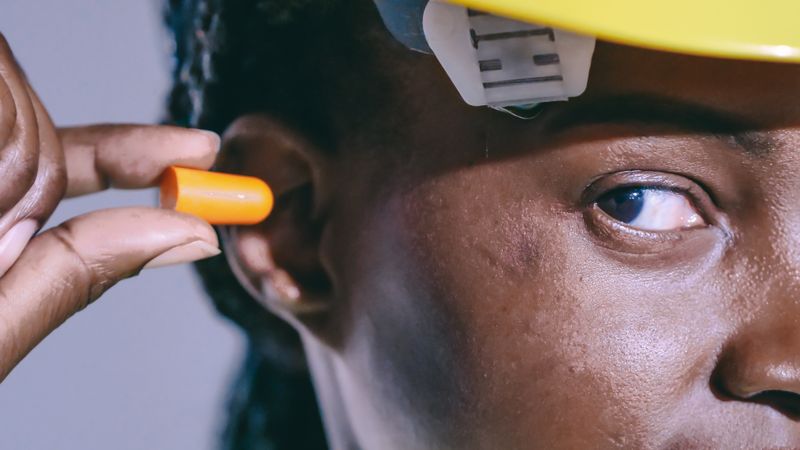
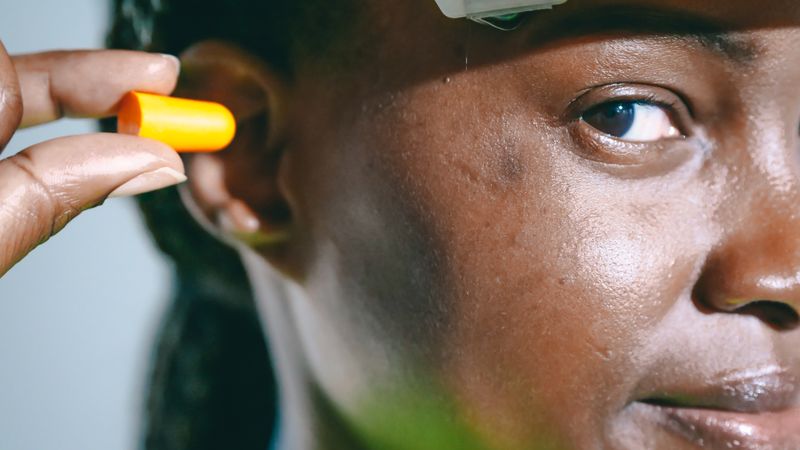
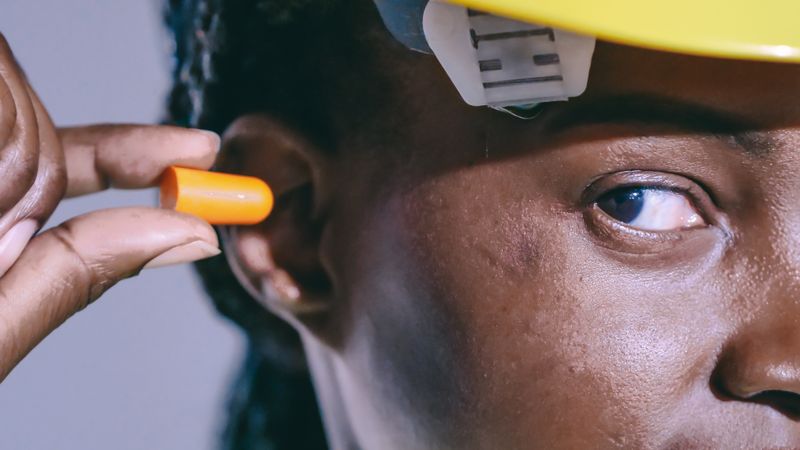
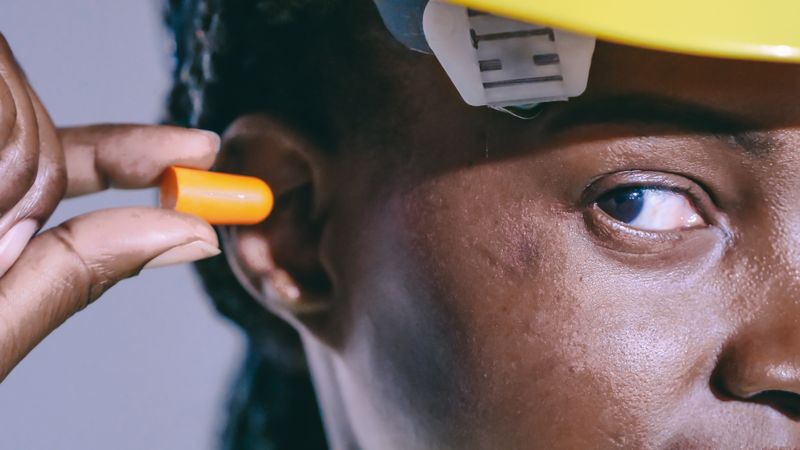
- Wear hearing protection — earplugs or ear defenders should be worn in any environment where you need to raise your voice to be heard at arm’s length (a rough indicator of 85 dB or above). Custom-moulded earplugs offer superior comfort and attenuation for frequent use
- Take listening breaks — give your ears regular recovery periods during and after noise exposure. Step outside at concerts. Remove earbuds between calls. The hair cells need rest to recover from temporary stress
- Increase your distance — sound intensity decreases with distance from the source. Standing further from speakers at a concert or moving away from noisy machinery when not actively working reduces your exposure significantly
- Choose quieter alternatives — noise-cancelling headphones allow you to listen at lower volumes by blocking background noise. Electric garden tools are typically quieter than petrol-powered equivalents
For workers, the responsibility is shared. Employers must conduct noise risk assessments, implement engineering controls to reduce noise at source, provide appropriate hearing protection free of charge, and arrange hearing surveillance for exposed employees. Employees have a duty to use the protection provided and to report concerns about noise levels.
Your Legal Rights as a Worker
UK workers have robust legal protections when it comes to noise exposure. Under the Control of Noise at Work Regulations 2005, employers must:
- Carry out a noise risk assessment where employees are likely to be exposed to 80 dB or above
- Provide information, instruction, and training about noise risks and precautions
- Make hearing protection available at 80 dB and enforce its use at 85 dB
- Introduce technical and organisational measures to reduce noise exposure
- Provide health surveillance (regular hearing tests) for workers regularly exposed above the upper action value
- Maintain and inspect noise-control equipment and hearing protection
If you have developed hearing loss that you believe was caused by workplace noise exposure, you may be entitled to compensation. Industrial deafness claims can be made against current or former employers, and there is no time limit on claiming for hearing damage that has only recently been diagnosed. The process typically involves an independent audiological assessment and a review of your occupational noise history. A solicitor specialising in industrial disease can advise on the strength of your claim.
Additionally, the Department for Work and Pensions administers the Industrial Injuries Disablement Benefit for workers who have developed occupational deafness. Eligibility depends on the type of occupation and the level of hearing loss.
Treatment Options for NIHL
There is currently no medical or surgical cure for noise-induced hearing loss. Once cochlear hair cells are destroyed, the damage is permanent and irreversible. However, effective treatments exist to manage the condition and restore much of the communication ability that has been lost.
Hearing aids are the primary treatment for NIHL and can be highly effective. Modern devices are specifically designed to address the high-frequency hearing loss pattern that characterises noise damage. Features such as directional microphones, noise reduction algorithms, and speech enhancement technology help to compensate for the frequencies most affected. The NHS provides hearing aids free of charge, including batteries, repairs, and aftercare. Private audiologists — including Boots Hearingcare and Specsavers Audiology — offer a wider range of styles and technology levels, with prices typically ranging from £1,000 to £3,500 per pair.
Tinnitus management is often an important part of treatment for people with NIHL. Options include cognitive behavioural therapy (CBT), sound therapy, tinnitus retraining therapy, and hearing aids with built-in tinnitus masking features. The NHS provides tinnitus services through audiology and ear, nose and throat (ENT) departments. A tinnitus assessment can help determine the most appropriate management approach.
Research into hair cell regeneration and gene therapy offers hope for future treatments, with clinical trials ongoing in the United States and Europe. However, these therapies remain experimental and are likely years away from clinical availability. For now, prevention and early intervention with hearing aids remain the most effective strategies.
When to Get Your Hearing Tested
If you work or have ever worked in a noisy environment, attend live music regularly, use power tools, or have noticed any of the warning signs described above, you should arrange a hearing test without delay. Early detection is critical — not because the damage can be reversed, but because identifying hearing loss early allows you to take immediate steps to prevent further deterioration and to access treatment that can dramatically improve your quality of life.
A standard hearing test takes around 30 minutes and is completely painless. You will be asked to listen to tones at different frequencies and volumes through headphones, and the results are plotted on an audiogram that shows exactly which frequencies have been affected. If noise damage is detected, your audiologist will discuss prevention strategies, hearing protection options, and whether hearing aids would benefit you.
You do not need a GP referral for a hearing test. Both NHS hearing tests and private assessments are available across the UK, with many high street audiologists offering same-week appointments. If you are unsure where to start, enter your postcode into our search tool to compare audiologists near you and find availability today.
Noise-induced hearing loss is permanent, but it is also entirely preventable. Every decibel of protection matters. Every hearing test matters. And every day you wait to address a suspected problem is a day of unnecessary risk. Your hearing is irreplaceable — treat it that way.