Music is one of life's great joys — but it is also one of the leading causes of noise-induced hearing loss and tinnitus in the UK. According to the World Health Organisation, over one billion young people worldwide are at risk of hearing damage from recreational noise exposure, including live music. In Britain alone, the charity Help Musicians estimates that roughly 40% of professional musicians experience some degree of hearing difficulty, and the British Tinnitus Association reports that musicians are approximately four times more likely to develop tinnitus than the general population. For concert-goers, DJs, sound engineers, and music teachers, the picture is similarly sobering. Yet the vast majority of music-related hearing damage is entirely preventable — if you understand the risks and take sensible precautions.
How Loud Is Too Loud? Understanding Decibel Levels
Sound intensity is measured in decibels (dB), and the relationship between volume and hearing damage is not linear — it is exponential. Every increase of 3 dB represents a doubling of sound energy, meaning that a 100 dB concert is not merely "a bit louder" than a 97 dB one; it delivers twice the acoustic energy to your ears. The Health and Safety Executive (HSE) sets the lower exposure action value at 80 dB over an eight-hour working day, with mandatory hearing protection required at 85 dB. At 100 dB, the safe exposure time drops to just 15 minutes.
To put this in perspective, here are typical sound levels in musical environments:
- Acoustic rehearsal room: 80–90 dB
- Orchestral performance (fortissimo passage): 90–105 dB
- Amplified band rehearsal: 95–110 dB
- Nightclub DJ booth: 95–115 dB
- Rock/pop concert (front of stage): 100–120 dB
- Festival main stage (near speakers): 105–125 dB
A standard two-hour concert at 100 dB delivers a noise dose equivalent to an entire eight-hour shift at 85 dB — compressed into a fraction of the time. A DJ who plays a four-hour set at 100 dB receives roughly four times the daily recommended dose. And unlike workplace noise, recreational exposure is entirely unregulated: there is no obligation for venues to provide hearing protection or limit sound levels for audiences, though some festivals and venues are beginning to adopt voluntary noise management policies.
Occupational vs Recreational Exposure: A Double Hit
Professional musicians face a particular challenge because their noise exposure is both occupational and recreational. A touring guitarist might rehearse for two hours in the afternoon, perform a 90-minute set in the evening, and then spend the after-show in a noisy bar — accumulating well over the daily safe limit across multiple environments. Orchestral musicians in pit orchestras often sit directly in front of brass sections, exposed to sustained levels above 90 dB for entire performances. Music teachers in schools spend hours in reverberant classrooms with ensembles and drum kits.
The Control of Noise at Work Regulations 2005 require employers to assess noise risks and provide hearing protection. In practice, enforcement in the music industry has been inconsistent. Many freelance musicians, self-employed DJs, and gigging artists fall outside traditional employer-employee structures, leaving them without formal risk assessments or audiometric monitoring. The Musicians’ Union has campaigned for better awareness and provides guidance on protecting your hearing in professional settings, but individual responsibility remains critical.
For recreational concert-goers, the risks are lower on a per-event basis but still meaningful for those who attend live music regularly. A person who goes to two or three gigs a month, or who frequents nightclubs every weekend, accumulates significant lifetime noise exposure. Research published in the International Journal of Audiology has found that regular concert attendance without hearing protection is associated with a measurably higher prevalence of high-frequency hearing loss and tinnitus in adults under 35.
Types of Hearing Protection: From Foam to Custom-Moulded
Not all hearing protection is created equal, and for musicians and music lovers, choosing the right type can make the difference between compliance and abandonment. The ideal earplug reduces volume to a safe level while preserving the quality and balance of the music you love.
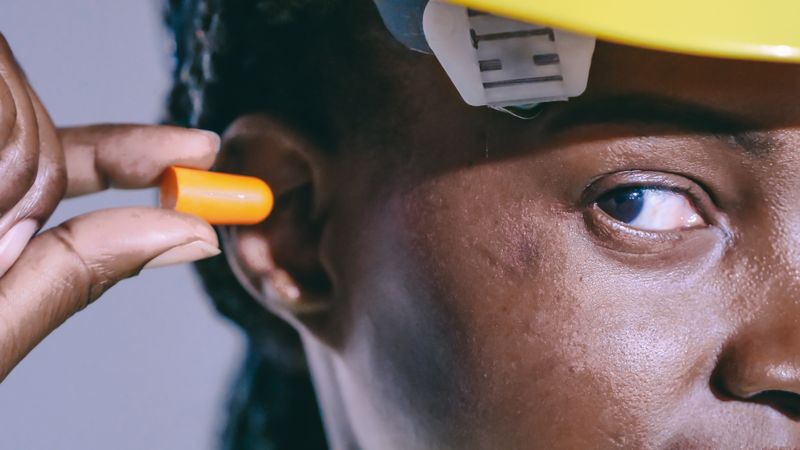
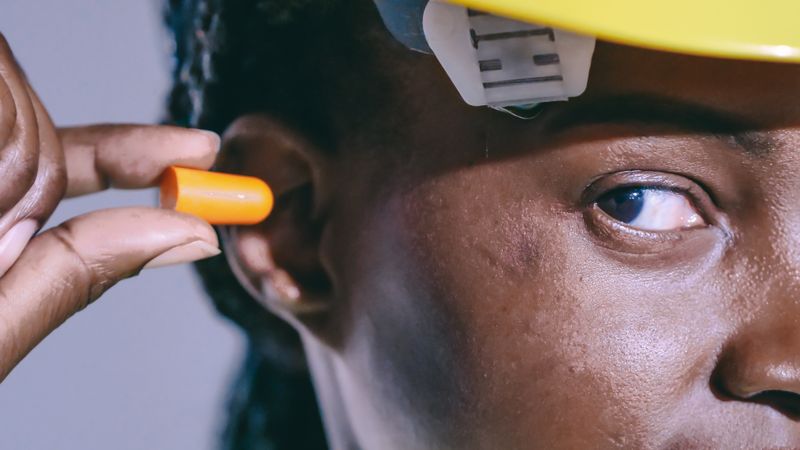
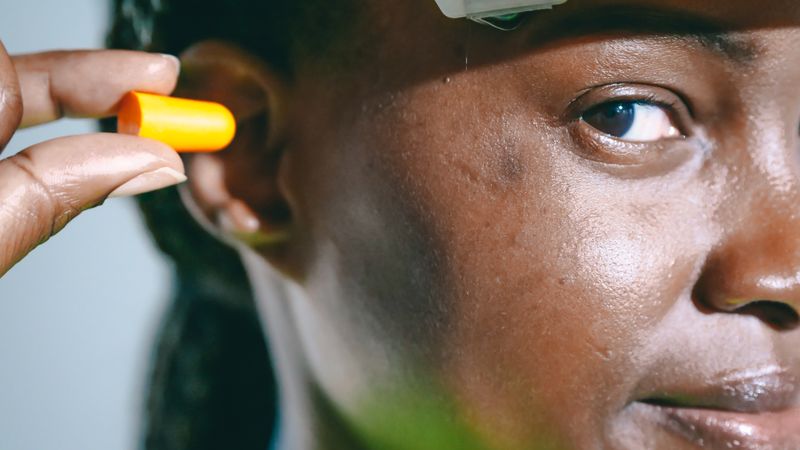
Disposable foam earplugs are the cheapest option, available from pharmacies and pound shops for pennies per pair. They typically reduce noise by 25–35 dB across all frequencies, but they do so unevenly — attenuating high frequencies far more than low frequencies. The result is a muffled, bass-heavy sound that makes music virtually unrecognisable. For musicians who need to hear pitch, timing, and tonal balance, foam plugs are generally unsuitable. However, they are far better than nothing, and keeping a pair in your pocket for unexpected noise exposure is always wise.
Flat-attenuation musician’s earplugs are specifically engineered to reduce volume evenly across the frequency spectrum, preserving the natural balance of music. Off-the-shelf versions from brands such as Alpine, Loop, and Earpeace are available for £15–£35 and represent excellent value. Most come with interchangeable filters offering 9 dB, 15 dB, or 25 dB of reduction, allowing you to choose the appropriate level for different environments — a 9 dB filter for acoustic gigs, 15 dB for amplified concerts, and 25 dB for the loudest festivals and clubs.
Custom-moulded musician’s earplugs are the gold standard. An audiologist takes silicone impressions of your ear canals and has bespoke earplugs manufactured to fit your ears precisely. The result is superior comfort, a secure fit that stays in place during vigorous movement, and the best possible sound quality at reduced volume. Prices typically range from £100 to £200 per pair, and with proper care they last for several years. Many audiologists and hearing clinics offer musicians’ hearing assessments that include custom earplug fitting as part of the appointment. If you perform regularly, this is one of the best investments you can make.
In-ear monitors (IEMs) are used by professional musicians and DJs as an alternative to wedge monitors and foldback speakers on stage. Rather than competing with amplified stage volume, IEMs deliver a controlled, personalised mix directly to the performer’s ears at a safe level. Custom-moulded IEMs provide passive noise isolation of 25–30 dB, meaning that ambient stage noise is dramatically reduced even before the monitor signal is factored in. Professional-grade IEM systems from manufacturers such as Shure, Westone, and 64 Audio start from around £300 and can exceed £1,500 for multi-driver custom models. For working musicians, IEMs can be genuinely life-changing — both for hearing preservation and for on-stage performance quality.
Famous Musicians Who Have Spoken Out
The list of musicians affected by hearing loss and tinnitus reads like a hall of fame. Pete Townshend of The Who has spoken extensively about his severe hearing loss and tinnitus, attributing it to decades of exposure to extreme stage volumes and the infamous on-stage pyrotechnics incident at a 1967 television appearance. Chris Martin of Coldplay has worn custom earplugs since developing tinnitus in his mid-twenties and has been vocal about encouraging young fans to protect their hearing. Eric Clapton has discussed his worsening hearing loss in interviews, describing the challenge of performing while struggling to hear clearly.
In the classical world, the issue is equally prevalent. The Royal Philharmonic Orchestra has implemented comprehensive hearing conservation programmes after studies revealed that a significant proportion of its musicians had measurable hearing loss. In the electronic music scene, DJs including Deadmau5 and Mark Ronson have spoken about tinnitus and the importance of monitoring booth volume levels. Rapper Plan B abandoned live performance for several years partly due to severe tinnitus.
These high-profile cases have helped to destigmatise hearing protection in the music industry. Where earplugs were once seen as uncool or a sign of weakness, they are increasingly viewed as a professional tool — no different from a guitarist’s pedalboard or a drummer’s sticks.
Tinnitus in Musicians: The Silent Career Threat
Tinnitus — the perception of sound when no external source is present — is often described by sufferers as ringing, buzzing, hissing, or humming. For musicians, tinnitus is particularly cruel: the very ears they depend on for their art become a source of constant, intrusive noise. The British Tinnitus Association estimates that around 7.1 million adults in the UK experience tinnitus, and prevalence among musicians is significantly higher than in the general population.
Temporary tinnitus after a loud concert is extremely common — most regular gig-goers have experienced ringing ears that fades after a few hours or by the following morning. This temporary tinnitus is a warning sign: it indicates that the delicate hair cells of the inner ear have been stressed by excessive noise. With repeated exposure, temporary tinnitus can become permanent. Once the hair cells are damaged beyond their capacity to recover, the tinnitus becomes chronic, and there is currently no cure.
For musicians, chronic tinnitus can affect pitch perception, concentration, sleep, and mental health. A study published in Medical Problems of Performing Artists found that musicians with tinnitus reported higher levels of anxiety and depression than those without, and many described a sense of grief at the deterioration of their hearing. If you experience tinnitus after noise exposure that persists for more than 48 hours, you should book a tinnitus assessment with a qualified audiologist.
Ready to get your hearing checked?
Enter your postcode to compare audiologists and book today.
Find appointments →Help Musicians: Support for the Industry
Help Musicians (formerly the Musicians Benevolent Fund) is the UK’s leading charity supporting musicians’ health and wellbeing. The charity offers a dedicated Health and Wellbeing programme that includes subsidised hearing assessments, access to audiologists experienced in working with musicians, and financial support for hearing protection and in-ear monitors. Their Hearing Health scheme provides grants of up to £500 towards custom hearing protection for professional musicians in financial need.
Help Musicians has also partnered with audiologists across the UK to offer discounted musicians’ hearing tests, which go beyond the standard hearing test to assess the specific frequencies and dynamic range that musicians rely on. These assessments typically include extended high-frequency audiometry (testing up to 16 kHz rather than the standard 8 kHz), speech-in-noise testing, and tinnitus evaluation. If you are a professional or semi-professional musician, the charity’s resources are well worth exploring.
The Musicians’ Union also provides guidance on hearing health as part of its workplace safety resources, and has lobbied for better enforcement of noise regulations in rehearsal studios, venues, and recording environments. Their Safe Ears campaign has distributed thousands of free earplugs at venues and festivals across the UK.
Practical Tips for Concert-Goers and Music Fans
You absolutely do not need to stop enjoying live music to protect your hearing. With a few simple habits, you can dramatically reduce your risk of permanent damage:
- Wear musician’s earplugs. A pair of flat-attenuation earplugs costing £20 can reduce your noise exposure by 15–25 dB while preserving the clarity and balance of the music. Keep them on your keyring or in your wallet so they are always to hand.
- Position yourself wisely. Sound intensity decreases with distance from the source. Moving from directly in front of a PA stack to a few metres back or to one side can reduce your exposure by 5–10 dB — a significant difference over a two-hour concert.
- Take regular breaks. Step outside, visit the bar, or find a quieter area for 10–15 minutes every hour. These rest periods allow the hair cells of your inner ear to begin recovering from the stress of sustained noise.
- Monitor your listening levels. Smartphone apps such as the NIOSH Sound Level Meter and Apple’s built-in Noise app can give you a rough indication of the noise levels in your environment. If levels consistently exceed 100 dB, earplugs are essential.
- Allow recovery time. After a loud event, give your ears at least 16–18 hours of relative quiet before the next significant noise exposure. Back-to-back nights of loud music without recovery are particularly damaging.
- Limit headphone volume. The WHO recommends keeping personal listening devices at no more than 60% of maximum volume for no more than 60 minutes at a time — the “60/60 rule.” Noise-cancelling headphones can help by reducing the temptation to turn up the volume to overcome background noise.
When to Get a Hearing Test
If you are a musician, DJ, sound engineer, or regular concert-goer, proactive hearing monitoring is essential. You should book a hearing test if you experience any of the following:
- Persistent ringing, buzzing, or hissing in your ears (tinnitus) lasting more than 48 hours after noise exposure
- Difficulty hearing conversations in noisy environments, such as pubs or restaurants
- A sense that sounds are muffled or less crisp than they used to be
- Needing to turn the television or headphones up louder than others find comfortable
- Difficulty hearing high-pitched sounds such as birdsong, doorbells, or consonant sounds in speech
Even without symptoms, musicians and audio professionals should consider having a baseline musicians’ hearing test early in their career, then repeat the assessment every one to two years. This allows your audiologist to detect subtle changes in your hearing before they become noticeable, giving you the opportunity to adjust your protection strategy. Many high-street audiologists, including Boots Hearingcare and Specsavers Audiology, offer comprehensive hearing assessments that can identify early signs of noise-induced hearing loss. For a musicians-specific assessment, look for an audiologist with experience in performing arts audiology — Help Musicians maintains a directory of recommended practitioners.
Music-related hearing loss is not an inevitable consequence of a life spent around amplified sound. With the right protection, sensible habits, and regular monitoring, you can enjoy decades of music — whether on stage or in the audience — without sacrificing your hearing. The smartest thing any musician or music lover can do is treat hearing protection as essential equipment, not an optional extra.