If there is one health check that people over 60 should prioritise alongside blood pressure and cholesterol screening, it is a hearing test. Age-related hearing loss — known medically as presbycusis — is one of the most common chronic conditions in the United Kingdom, yet it remains chronically under-diagnosed and under-treated. The average delay between first noticing hearing difficulties and actually seeking help is a staggering ten years. During that decade, the consequences of untreated hearing loss compound silently: increased risk of cognitive decline, social withdrawal, depression, falls, and loss of independence. This guide explains why regular hearing tests matter more than ever after 60, what to expect from the process, and how to take the first step.
The Scale of the Problem: UK Statistics
The numbers paint a stark picture. According to the RNID (Royal National Institute for Deaf People), there are approximately 12 million adults with hearing loss in the UK — roughly one in five of the adult population. But the prevalence rises sharply with age. Among people aged 61 to 70, around 40 per cent have measurable hearing loss. By 71 to 80, that figure climbs to approximately 70 per cent. Among those over 80, hearing loss affects more than 80 per cent of the population.
Despite these numbers, Action on Hearing Loss estimates that only around 40 per cent of people who would benefit from hearing aids actually use them. The gap between need and action is vast, and it has real consequences. NHS England data suggests that hearing loss costs the UK economy an estimated 25 billion pounds annually in lost productivity, healthcare utilisation, and social care. On an individual level, untreated hearing loss is associated with reduced earnings, early retirement, and increased dependence on health and social services.
Perhaps most troubling is the fact that the UK has no national hearing screening programme for older adults, unlike the newborn hearing screening programme that tests every baby born in the country. Calls from organisations including the RNID and the British Society of Audiology for routine hearing screening at age 65 have so far not been implemented, meaning the responsibility falls on individuals to recognise the signs and seek testing themselves.
The Cognitive Link: Hearing Loss and Dementia
The relationship between hearing loss and cognitive decline is arguably the most compelling reason for older adults to prioritise regular hearing tests. In 2017, the Lancet Commission on Dementia Prevention, Intervention, and Care identified hearing loss as the single largest modifiable risk factor for dementia — contributing a greater share of attributable risk than smoking, hypertension, depression, physical inactivity, social isolation, or diabetes. The Commission estimated that addressing hearing loss could prevent up to 8 per cent of all dementia cases worldwide.
Subsequent research has strengthened this association. The landmark ACHIEVE trial, published in The Lancet in 2023, found that hearing aid use slowed cognitive decline by 48 per cent over three years in older adults who were at elevated risk for dementia. While the mechanism is not fully understood, leading theories include the cognitive load hypothesis (the brain devotes so much effort to processing degraded auditory signals that fewer resources are available for memory and thinking), the social isolation pathway (hearing loss leads to withdrawal from conversations and social activity, which accelerates cognitive decline), and direct neurological changes (reduced auditory input leads to structural changes in the brain, including atrophy of the temporal lobe).
The critical takeaway is that hearing loss is not merely a symptom of ageing — it is an active contributor to cognitive decline. And unlike many dementia risk factors, it is highly treatable. Getting tested and, if necessary, fitted with hearing aids is one of the most evidence-based steps an older adult can take to protect their brain health.
What Does a Hearing Test Involve for Older Adults?
If you have never had a hearing test — or not had one in many years — it is natural to feel uncertain about what to expect. The good news is that hearing tests are quick, completely painless, and non-invasive. Here is what a typical appointment looks like:
- Case history: The audiologist will ask about your hearing concerns, medical history, noise exposure, family history of hearing loss, and any medications you take (some medications are ototoxic, meaning they can affect hearing).
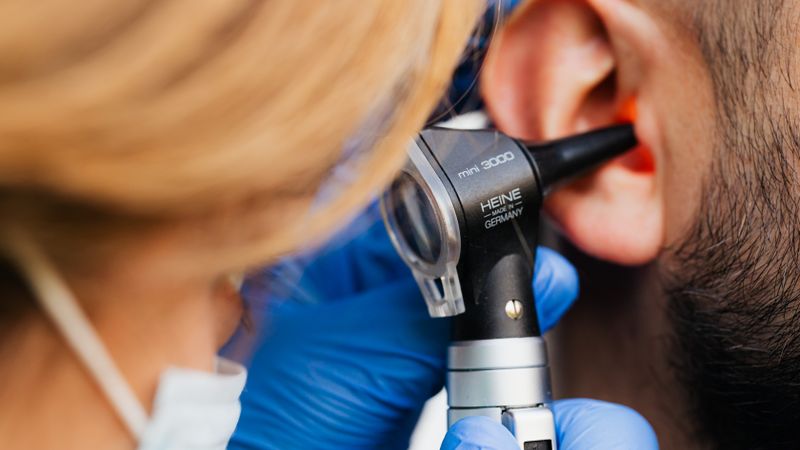
- Otoscopy: A visual examination of your ears using an otoscope to check for earwax build-up, infection, or any structural abnormalities of the ear canal and eardrum.
- Pure-tone audiometry: The core of the hearing test. You wear headphones in a sound-treated room and respond (usually by pressing a button) each time you hear a tone. Tones are played at different frequencies (pitches) and volumes to map the quietest sounds you can detect across the speech range. This typically takes 10 to 15 minutes.
- Speech audiometry: You listen to recorded or live speech at various volumes and repeat back words or sentences. This assesses how well you understand speech, which is often a better indicator of real-world hearing ability than pure-tone results alone.
- Speech-in-noise testing: Some clinics include a test where you listen to speech against a background of noise. This is particularly relevant for older adults, because difficulty hearing in noisy environments — restaurants, family gatherings, busy shops — is often the first sign of age-related hearing loss.
- Results and explanation: Your results are plotted on an audiogram, and the audiologist will explain what the results mean, whether any hearing loss has been detected, and what options are available.
The entire appointment typically takes 30 to 45 minutes. There is nothing to prepare for, no fasting or medication changes required, and you can drive yourself home afterwards. If earwax is blocking your ear canals, the audiologist may recommend wax removal before testing to ensure accurate results.
Ready to get your hearing checked?
Enter your postcode to compare audiologists and book today.
Find appointments →NHS vs Private: Your Testing Options
Older adults in the UK have two main pathways to a hearing test, each with its own advantages.
The NHS pathway begins with a visit to your GP, who will examine your ears and, if appropriate, refer you to an NHS audiology department. NHS hearing tests are completely free, and if hearing aids are recommended, they are also provided free of charge (on long-term loan). The main limitation is waiting times: depending on your area, the wait between GP referral and audiology appointment can range from a few weeks to several months. NHS hearing aid choices are more limited than in the private sector, though the devices offered — typically behind-the-ear models from manufacturers like Phonak, Oticon, or Danalogic — are clinically effective and well-supported.
Private hearing tests are available from high-street providers such as Specsavers Audiology and Boots Hearingcare, as well as from independent audiologists. Many offer free hearing tests or charge a modest fee (typically 20 to 50 pounds) that is often waived if you purchase hearing aids. The advantages of going private include shorter waiting times (often same-week appointments), a wider selection of hearing aid styles and technologies, and more flexibility with appointment scheduling. The trade-off is cost: private hearing aids range from around 500 to 3,500 pounds per ear depending on the technology level.
There is no clinical difference in the quality of the hearing test itself — both NHS and private audiologists are registered with the Health and Care Professions Council (HCPC) and follow the same professional standards. The choice often comes down to waiting times, budget, and personal preference regarding hearing aid options.
How Often Should Over-60s Be Tested?
From the age of 60, audiological bodies including the RNID, the British Society of Hearing Aid Audiologists (BSHAA), and the World Health Organisation recommend annual hearing tests. This advice applies even if you believe your hearing is fine, for several important reasons:
- Baseline tracking: An annual test establishes a baseline against which future results can be compared. Age-related hearing loss is gradual — often so gradual that you do not notice it yourself. Year-on-year comparisons can reveal clinically significant changes that subjective experience misses.
- Early intervention: Research consistently shows that early intervention with hearing aids leads to better outcomes. People who are fitted with hearing aids soon after diagnosis adapt more easily, achieve better speech understanding, and experience greater satisfaction than those who wait years before acting.
- Hearing aid optimisation: If you already wear hearing aids, annual testing is essential. Your hearing can continue to change after fitting, and your aids may need reprogramming to match your current hearing profile. An annual hearing aid aftercare appointment ensures your devices are performing at their best.
- Detecting other conditions: Hearing tests can sometimes reveal issues beyond simple age-related loss, including asymmetric hearing loss that may warrant further investigation, tinnitus, or conditions such as otosclerosis or acoustic neuroma that require medical referral.
Overcoming Barriers: Stigma, Denial, and Mobility
Despite the clear benefits of regular hearing tests, many older adults delay or avoid them altogether. Understanding the barriers can help overcome them.
Stigma remains a significant obstacle. Many people associate hearing aids with old age, frailty, or disability, and resist testing because they fear the implications of a diagnosis. The reality is that modern hearing aids are remarkably discreet — many are virtually invisible when worn — and the stigma of wearing one is far less than the social consequences of untreated hearing loss: constantly asking people to repeat themselves, withdrawing from conversations, and missing important information.
Denial is equally powerful. Because age-related hearing loss develops gradually, many people genuinely do not realise how much they are missing. They may attribute difficulties to other people mumbling, background noise being too loud, or televisions being poorly mixed. Family members and friends often notice the problem long before the person with hearing loss acknowledges it. If someone close to you has suggested you might have a hearing problem, take it seriously — they are probably right.
Mobility and accessibility can be genuine practical barriers for older adults with limited mobility, chronic health conditions, or no access to transport. Fortunately, several solutions exist. Many private audiologists offer home visit hearing tests, bringing all the necessary equipment to your home for a full diagnostic assessment. Some NHS trusts provide domiciliary audiology services for housebound patients — ask your GP about availability in your area. Online hearing screening tests can provide a useful initial indication of whether a full test is warranted, though they are not a substitute for a diagnostic assessment by a qualified audiologist.
Falls, Social Isolation, and Mental Health
The consequences of untreated hearing loss in older adults extend well beyond missing words in conversation. Research has identified strong associations between hearing loss and several other serious health outcomes.
Falls risk: A study by Johns Hopkins University found that even mild hearing loss triples the risk of accidental falls. For every additional 10 decibels of hearing loss, the risk of falling increased by 1.4 times. The mechanisms likely include reduced spatial awareness (hearing helps us orient ourselves in space and detect approaching hazards), cognitive overload (the mental effort of straining to hear leaves fewer resources for balance and gait), and changes to inner ear function that may affect both hearing and vestibular (balance) systems. For older adults, a fall can be life-changing — hip fractures, head injuries, and the resulting loss of confidence and independence represent one of the most significant threats to healthy ageing.
Social isolation and loneliness: Hearing loss is strongly associated with social withdrawal. When conversations become effortful and exhausting, many people begin avoiding social situations — declining invitations, stopping attendance at clubs and community groups, and reducing contact with friends and family. Age UK reports that over a million older adults in the UK say they go more than a month without speaking to a friend, neighbour, or family member. Hearing loss is a significant contributing factor to this epidemic of loneliness, which itself is associated with increased mortality, cardiovascular disease, and cognitive decline.
Depression and anxiety: The National Council on Aging reports that older adults with untreated hearing loss are significantly more likely to experience depression, anxiety, and reduced self-esteem compared to those who use hearing aids. The frustration of not being able to follow conversations, the embarrassment of misunderstanding, and the gradual erosion of social connections all take a toll on mental health. Multiple studies have shown that hearing aid use is associated with reduced rates of depression in older adults.
Hearing Aids for Over 60s: A Brief Overview
If a hearing test reveals that you would benefit from amplification, the next step is a hearing aid fitting. Modern hearing aids bear little resemblance to the bulky, whistling devices of decades past. Today's instruments are sophisticated digital computers that process sound in real time, adapting automatically to different listening environments. Key features available in current hearing aids include:
- Directional microphones that focus on speech from in front while reducing background noise
- Wireless connectivity via Bluetooth, allowing you to stream phone calls, music, and television audio directly to your hearing aids
- Rechargeable batteries that eliminate the need to handle tiny disposable batteries (a particular advantage for those with reduced dexterity)
- Compatibility with hearing loops in public venues, theatres, places of worship, and bank counters
- Smartphone apps that let you adjust volume, switch programmes, and monitor your hearing health from your phone
Choosing the right hearing aids involves balancing your hearing needs, lifestyle, dexterity, budget, and cosmetic preferences. Your audiologist will guide you through the options during your hearing aid consultation. The NHS provides hearing aids free of charge, and most private providers offer trial periods so you can test devices in your everyday life before committing.
Practical Steps to Take Today
If you are over 60 and have not had a hearing test in the past 12 months — or if you have never had one — here is what to do:
- Take a quick online screening test. An online hearing test takes just a few minutes and can give you an initial indication of whether a full assessment is warranted. It is not a diagnostic tool, but it is a useful first step if you are unsure whether you have a problem.
- Book a full hearing test. You can ask your GP for an NHS referral, or search for a local audiologist and book directly. Many high-street providers offer free or low-cost hearing assessments with no obligation.
- Talk to your family. Ask trusted family members or friends whether they have noticed any changes in your hearing. They may have observed signs — turning the television up, asking people to repeat themselves, missing doorbells or phone rings — that you have not noticed yourself.
- Protect the hearing you have. Hearing protection is not just for young people. Wear ear protection when using power tools, attending loud events, or in any environment where you need to raise your voice to be heard at arm's length.
- Make it annual. Once you have had your first test, make a diary note to repeat it every year. Treat it like a dental check-up or an eye test — a routine part of looking after your health.
Hearing loss does not have to define your later years. With regular testing, early intervention, and the remarkable technology available today, most age-related hearing loss can be effectively managed, allowing you to stay connected, independent, and engaged with the world around you. The first step is the simplest one: book a test.