Why So Many People Put Off Their First Hearing Test
If you have been thinking about getting your hearing checked but have not quite got around to it, you are far from alone. According to the RNID (Royal National Institute for Deaf People), it takes the average person ten years from first noticing a change in their hearing to actually seeking help. Ten years of asking people to repeat themselves, turning the television up a notch higher each month, and quietly withdrawing from conversations in noisy restaurants.
The reasons for delay are deeply human. Some people worry that a hearing test will confirm something they would rather not face. Others feel that hearing loss is something that only happens to much older people — a stigma that persists despite the fact that around 12 million adults in the UK have some degree of hearing loss, many of them of working age. There is also a common misconception that hearing tests are uncomfortable or invasive. They are neither.
The truth is that a hearing test is one of the simplest, most painless health checks you can have. It typically takes between 20 and 45 minutes, requires no special preparation, and gives you clear, actionable information about one of your most important senses. Whether the results show perfect hearing or suggest you would benefit from support, you will walk out knowing exactly where you stand — and that knowledge is genuinely empowering.
Who Should Get a Hearing Test?
The British Society of Audiology (BSA) recommends that adults have their hearing checked if they notice any changes, but certain groups should be particularly proactive about booking an assessment.
- Adults aged 55 and over — age-related hearing loss (presbycusis) is the most common form of hearing loss in the UK, and it develops so gradually that many people do not realise it is happening. NICE guidelines suggest that GPs should consider hearing assessment for patients over 50 who report difficulty hearing.
- People with a history of noise exposure — whether from working in construction, manufacturing, or the music industry, or from years of listening to loud music through headphones. Noise-induced hearing loss is permanent but preventable with early detection.
- Anyone experiencing tinnitus — persistent ringing, buzzing, or hissing in the ears often accompanies hearing loss and should always be investigated by an audiologist.
- People who struggle to follow conversations — particularly in group settings, on the phone, or in background noise. If you find yourself reading lips more than you used to, that is a meaningful sign.
- Those with a family history of hearing loss — genetics play a significant role in how our hearing changes over time, and early baseline testing can help track any decline.
- Anyone who simply wants a baseline — just as you would have your eyes tested regularly, establishing a hearing baseline in your 40s or 50s gives audiologists something to compare against in future years.
How to Book Your First Hearing Test
One of the first questions people ask is whether they need a GP referral or can go directly to an audiologist. The answer depends on whether you choose the NHS pathway or a private appointment — and both are excellent options.
The NHS Route
To access a free NHS hearing test, you will typically need a referral from your GP. Book a standard appointment, explain your concerns, and your doctor will refer you to the nearest NHS audiology department — usually based at a hospital or community clinic. Waiting times vary by region but are typically 4 to 12 weeks. The full assessment, any follow-up appointments, and NHS hearing aids (if needed) are all provided free of charge. For a detailed breakdown, see our guide to NHS hearing services.
The Private Route
If you would prefer not to wait, private hearing tests are widely available on the high street and can often be booked within days. Many providers offer free initial hearing assessments, including Specsavers Audiology and Boots Hearingcare, which between them have over 700 locations across the UK. You can book online, by phone, or simply walk in at many branches.
Private tests are particularly convenient if you want quick answers. Most high-street audiologists use the same clinical-grade equipment as NHS departments, and the audiologists themselves hold the same professional qualifications. The main difference is speed of access and, if hearing aids are recommended, the range of devices available to you.
Online Hearing Tests
If you are not quite ready for an in-person appointment, an online hearing test can give you a useful initial indication of whether your hearing has changed. These take just a few minutes and use your headphones to test your ability to hear different tones and speech in noise. They are not a substitute for a full clinical assessment, but they can be a helpful first step — and they might give you the confidence to book the real thing.
Before Your Appointment: What to Bring and How to Prepare
Here is the good news: a hearing test requires no special preparation at all. You do not need to fast, avoid caffeine, or do anything different from your normal routine. Simply turn up at your appointment time and the audiologist will guide you through everything.
That said, a little thought beforehand can help you get the most from your visit. Consider bringing or noting down the following:
- A list of your symptoms — when you first noticed changes, which situations are most difficult (phone calls, group meals, television), and whether one ear seems worse than the other.
- Your medical history — particularly any ear infections, surgeries, head injuries, or medications you are taking. Some medications (known as ototoxic drugs) can affect hearing.
- Your noise exposure history — jobs, hobbies, or events that involved loud noise over extended periods.
- Family hearing history — whether parents, siblings, or grandparents have experienced hearing loss.
- A companion — many people find it helpful to bring a partner or family member. They can offer a second perspective on your hearing difficulties and help you remember what the audiologist recommends.
One practical tip: try to avoid exposure to very loud noise in the 24 hours before your test. A loud concert or prolonged use of power tools can cause a temporary threshold shift that might affect your results.
Step by Step: What Happens During a Hearing Test
Knowing exactly what will happen can take the anxiety out of any medical appointment. Here is a detailed walkthrough of a standard hearing test, from the moment you sit down to the moment you leave.
1. Initial Consultation and Case History (5–10 minutes)
Your audiologist will start by talking with you. This is not a test — it is a conversation. They will ask about your hearing concerns, your medical and noise exposure history, your lifestyle, and what situations you find most challenging. This information helps them tailor the assessment and interpret the results in the context of your life. Be honest and specific: saying "I struggle to hear my grandchildren" gives them more to work with than "my hearing is not great."
2. Otoscopy — Ear Examination (2–3 minutes)
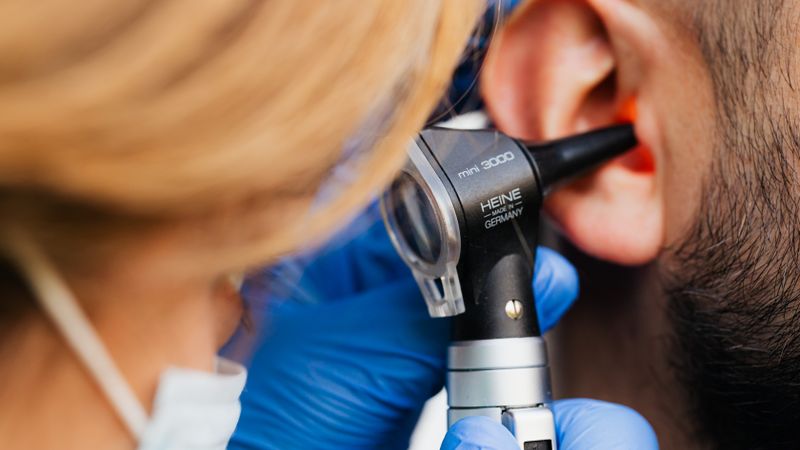
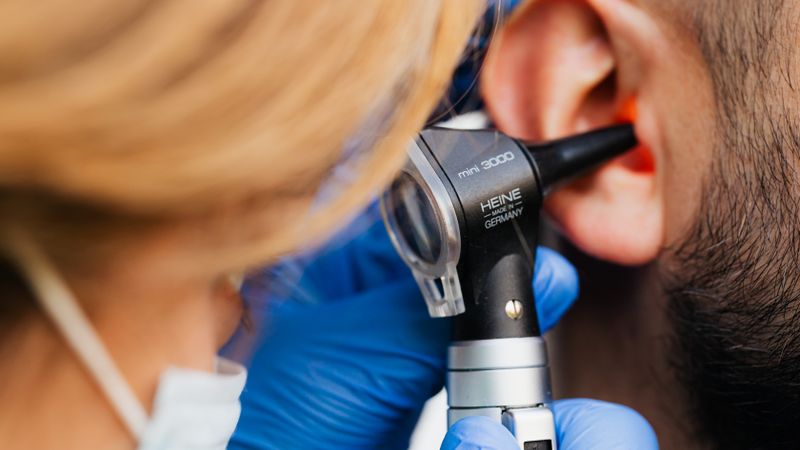
The audiologist will use an otoscope — a small handheld instrument with a light and magnifying lens — to look inside each ear canal. This is completely painless; you will feel a slight sensation as the instrument is positioned at the entrance to your ear canal, but it does not go deep and there is no discomfort.
They are checking for earwax build-up, signs of infection, inflammation, or any structural issues with your eardrum. If excessive wax is blocking your ear canal, they may recommend having it removed before the hearing test can proceed, as wax can artificially reduce your test results. This is one reason why some clinics offer wax removal and hearing tests in the same appointment.
3. Pure-Tone Audiometry (10–15 minutes)
This is the core of the hearing test, and it is the part most people picture when they think of having their hearing checked. You will be given a pair of headphones (or sometimes insert earphones) and asked to sit in a quiet room or sound-treated booth. The audiologist will play a series of tones at different frequencies (pitches) and volumes (intensities), and you simply press a button or raise your hand each time you hear a sound — even if it is very faint.
Each ear is tested separately. The frequencies tested typically range from 250 Hz to 8,000 Hz, covering the range most important for understanding speech. The audiologist gradually reduces the volume at each frequency to find the quietest sound you can just hear — your hearing threshold. In some cases, they will also test bone conduction by placing a small vibrating device behind your ear, which helps determine whether any hearing loss originates in the outer/middle ear or the inner ear.
The whole process is straightforward and stress-free. There are no trick questions and no wrong answers — you are simply responding to what you can hear.
4. Speech Audiometry (5–10 minutes)
While pure-tone testing measures what you can detect, speech audiometry measures what you can understand. You will listen to recorded or live words spoken at various volumes and be asked to repeat them back. Some clinics also test your ability to understand speech against background noise, which more closely mirrors real-world situations.
This test is particularly valuable because many people with hearing loss can hear that someone is speaking but cannot make out the words clearly — especially consonant sounds like "s," "f," and "th." Speech audiometry quantifies this difficulty and helps the audiologist recommend appropriate solutions.
5. Tympanometry (2–3 minutes, if included)
Not all hearing tests include tympanometry, but it is a common addition — particularly in NHS audiology departments. A small probe is placed at the entrance to your ear canal, creating a gentle change in air pressure. You will feel a slight sensation similar to the pressure change during a flight, lasting just a few seconds per ear.
Tympanometry measures how well your eardrum and middle ear are functioning. It can detect fluid behind the eardrum, perforated eardrums, or problems with the tiny bones (ossicles) that transmit sound. The results appear as a graph called a tympanogram and help the audiologist build a complete picture of your hearing health.
6. Results Discussion (5–10 minutes)
Once the tests are complete, your audiologist will explain the results immediately — you will not have to wait days or weeks for a letter. The main tool they will use is your audiogram, a graph that plots your hearing thresholds across different frequencies. For a deeper understanding of how to read this chart, see our guide to understanding audiograms.
Ready to get your hearing checked?
Enter your postcode to compare audiologists and book today.
Find appointments →Understanding Your Audiogram
Your audiogram might look like a simple graph, but it contains a wealth of information about your hearing. Here is how to read it.
The horizontal axis shows frequency (pitch), measured in Hertz (Hz), running from low-pitched sounds on the left (like a bass drum) to high-pitched sounds on the right (like a bird singing). The vertical axis shows intensity (volume), measured in decibels (dB HL), running from very quiet sounds at the top to loud sounds at the bottom. Your hearing thresholds are plotted as points on this graph — one line for each ear.
Hearing levels are classified into ranges by the World Health Organization and the British Society of Audiology:
- Normal hearing: 0–20 dB HL — you can hear quiet sounds like whispering and rustling leaves.
- Mild hearing loss: 21–40 dB HL — you may struggle with soft speech, especially in noisy environments.
- Moderate hearing loss: 41–70 dB HL — conversational speech becomes difficult to follow without raising your voice or reducing background noise.
- Severe hearing loss: 71–95 dB HL — you may only hear loud speech or sounds and will likely benefit significantly from hearing aids.
- Profound hearing loss: 96+ dB HL — most sounds are inaudible without amplification, and cochlear implants may be considered.
The shape of your audiogram matters too. Age-related hearing loss typically shows a characteristic "ski slope" pattern — normal hearing in the low frequencies sloping down to reduced hearing in the high frequencies. This explains why people with presbycusis can hear that someone is talking but find it hard to distinguish words, since speech clarity depends heavily on high-frequency consonant sounds.
What Happens if Hearing Loss Is Found
Hearing that you have some degree of hearing loss can feel daunting, but it is important to remember two things. First, you are now in a far better position than you were before the test — you have a clear diagnosis and a path forward. Second, modern hearing solutions are remarkably effective, discreet, and life-changing.
The NHS Hearing Aid Pathway
If your hearing test was conducted through the NHS and hearing aids are recommended, the process is straightforward. Your audiologist will discuss your options, take ear impressions if needed, and arrange a hearing aid fitting appointment — usually within a few weeks. NHS hearing aids are provided free of charge, including batteries, repairs, and ongoing support. Modern NHS devices are digital, programmable, and far more advanced than many people expect.
Private Hearing Aid Options
If you had a private assessment, your audiologist will present a range of hearing aid options at different price points. Private hearing aids tend to offer a wider selection of styles — including virtually invisible in-the-ear models and rechargeable behind-the-ear devices with Bluetooth connectivity. Prices typically range from £500 to £3,500 per ear, depending on the technology level. Most reputable providers include fitting, adjustment, and aftercare in the price.
If No Hearing Loss Is Found
If your audiogram shows normal hearing across all frequencies, that is excellent news — and the appointment was still worthwhile. You now have a baseline audiogram on file, which means any future changes can be measured against this reference point. Your audiologist may recommend retesting in a few years, or sooner if your symptoms change. If you came in because of difficulty hearing in certain situations, they can also discuss communication strategies and assistive listening devices that can help even with normal hearing thresholds.
Tips for Getting the Most from Your Appointment
A few practical suggestions to help you get the best possible experience and results from your first hearing test:
- Be completely honest — do not downplay your symptoms or try to "pass" the test. The audiologist is there to help, not to judge, and accurate results depend on honest responses.
- Ask questions — no question is too basic. If you do not understand something about the test, your results, or the next steps, ask. Good audiologists welcome curiosity.
- Take notes — or ask your companion to. You will receive a lot of information in a short time, and it is easy to forget details once you leave the clinic.
- Request a copy of your audiogram — this is your medical record and you are entitled to it. Having a copy makes it easier to compare results at future appointments, especially if you switch providers.
- Do not rush a decision on hearing aids — if hearing aids are recommended, reputable audiologists will never pressure you into an immediate purchase. Take the information home, research your options, and come back when you are ready.
- Book a follow-up — whether or not hearing loss is found, discuss with your audiologist when you should return for your next check. Regular monitoring is the key to managing hearing health proactively.
The Emotional Side: It Is OK to Feel Nervous
Let us talk about something that clinical guides often overlook: the emotional weight of a first hearing test. It is entirely normal to feel anxious, apprehensive, or even a little embarrassed about booking one. Hearing loss can feel like a marker of ageing, and the prospect of needing hearing aids can trigger complex feelings about identity, independence, and vanity.
These feelings are valid — and they are also almost universally temporary. Research consistently shows that the vast majority of people who finally get their hearing tested wish they had done it sooner. A survey by the RNID found that 79% of hearing aid users reported an improvement in their overall quality of life, including better relationships, greater confidence in social situations, and reduced mental fatigue.
There is also growing evidence linking untreated hearing loss to wider health consequences. A landmark study published in The Lancet identified hearing loss as the single largest modifiable risk factor for dementia, accounting for more attributable risk than smoking, hypertension, or physical inactivity. Getting your hearing checked is not just about hearing better today — it is about protecting your cognitive health for the decades ahead.
If anxiety is holding you back, consider starting with an online hearing test from the comfort of your home. Or simply search for audiologists near you and read reviews from other patients — you will quickly see that the experience is routine, professional, and overwhelmingly positive.
Your hearing matters. It connects you to the people you love, the music you enjoy, the world around you. A 30-minute appointment is a small investment for something so fundamental — and whatever the results, you will be glad you went.