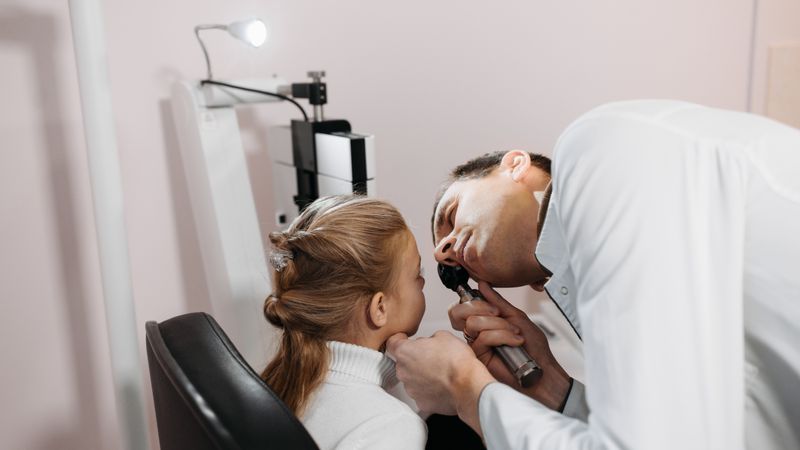
Why the New School Year Is the Right Time to Think About Hearing
In the last week of August, most parents are working through a familiar checklist: uniform, shoes, pencil case, lunch boxes, perhaps an eye test. Hearing rarely makes the list — and yet almost everything a child does in a classroom depends on it. Phonics, the foundation of how reading is taught in UK primary schools, relies on a child hearing the fine differences between sounds like "p" and "b", "s" and "f". Instructions are given verbally. Friendships are built through chat in noisy playgrounds and echoing dinner halls. A child who mishears even a fraction of the school day is working harder than their classmates just to stay level.
The scale of the issue surprises most parents. The National Deaf Children's Society estimates there are around 45,000 deaf children in the UK, but the number of children with a temporary or fluctuating hearing problem at any given moment is far higher. Glue ear — a build-up of fluid behind the eardrum — affects roughly one in ten children starting school, and about eight in ten children will have had at least one episode by their tenth birthday. Most cases resolve on their own, but while the fluid sits there, it can muffle hearing by 20 to 30 decibels: roughly the experience of listening to your teacher with your fingers in your ears.
The start of the school year is a natural moment to rule hearing problems out, for two practical reasons. First, summer is hard on children's ears — swimming pools, holiday flights and the tail end of hay fever season all increase the chances of ear infections and congestion that can leave fluid behind. Second, a hearing issue caught in September costs a child a few weeks of learning; one that drifts unnoticed until parents' evening in spring costs two terms. This guide explains why you cannot assume school will catch a problem, the signs to watch for at home and in the classroom, and exactly how to get a child's hearing tested in the UK.
The School Screening Postcode Lottery
Many parents assume their child's hearing is checked automatically at school, the way it was for previous generations. In much of the country, that is no longer true. The traditional school-entry hearing screen — the "sweep test" offered to four- and five-year-olds in reception — has been withdrawn in many areas of England, and the UK National Screening Committee does not currently recommend a universal school-entry programme. Whether your child is screened at school now depends almost entirely on where you live: some NHS trusts, such as those in parts of Kent and Scotland, still run reception-year screening, while many others have decommissioned it entirely.
The result is a genuine postcode lottery, and a dangerous assumption gap. The NHS newborn hearing screening programme is excellent — it checks nearly every baby born in the UK within weeks of birth and identifies most permanent congenital hearing loss early. But newborn screening cannot catch problems that develop later, and most childhood hearing problems do exactly that. Glue ear typically peaks between the ages of two and six. Ear infections, wax build-up and the rarer forms of progressive or acquired hearing loss all emerge during the school years, long after the newborn screen.
The practical consequence is simple: if you have any doubt about your child's hearing, the responsibility for acting on it sits with you, not the school. That is not how most parents believe the system works, and audiologists report that families are frequently shocked to learn a child has been struggling to hear for months or years. Children themselves almost never complain — a five-year-old with muffled hearing has usually never known anything different, and has no way of knowing that other children hear the teacher more clearly than they do.
Glue Ear: The Hidden Cause of Classroom Struggles
Glue ear — known medically as otitis media with effusion — deserves particular attention because it is so common, so easily missed, and so directly disruptive to school life. It occurs when the middle ear, the air-filled space behind the eardrum, fills with sticky fluid. The fluid usually appears after a cold or an episode of otitis media (middle ear infection), when the Eustachian tube — narrower and more horizontal in young children than in adults — fails to drain and ventilate the middle ear properly.
Crucially, glue ear is usually painless. There is no fever, no tugging at the ear, no obvious sign that anything is wrong. The only symptom may be hearing that is slightly worse than usual — and because the condition fluctuates, often worsening after every cold and improving in between, parents and teachers can each convince themselves the child is simply having an off week, daydreaming, or "not listening".
The impact in a classroom is anything but subtle. Research consistently shows that children with persistent glue ear can fall behind in speech, language and early literacy, and may struggle socially because they miss the quick, quiet exchanges that friendships are made of. Background noise makes everything worse: a child who copes reasonably well one-to-one at home may be lost in a classroom of thirty children with chairs scraping and corridors echoing. NICE guidance recommends a period of active monitoring for glue ear, usually around three months, because most cases resolve without treatment — but that monitoring can only happen if the condition is spotted in the first place. For persistent cases, treatment options include grommets (tiny ventilation tubes inserted into the eardrum) and temporary hearing aids, and outcomes are good.
The end of summer is a peak moment for glue ear risk. Swimming — especially frequent pool sessions on holiday — raises the risk of outer ear infections such as swimmer's ear, while summer colds and allergic congestion can inflame the Eustachian tube. A child who had two or three ear infections over the holidays is exactly the child whose hearing deserves a check before the demands of a new school year begin.
Signs Your Child May Not Be Hearing Properly
Children compensate remarkably well, which is why hearing problems hide in plain sight. Rather than one dramatic sign, look for patterns across home and school.
At home
- The television creeps louder. The most commonly reported sign — your child turns the volume up, or sits noticeably closer to the screen or speaker.
- "What?" becomes a habit. Frequently asking for repetition, or responding with answers that suggest they misheard the question rather than ignored it.
- No response from another room. A child who reliably answers when they can see you, but not when you call from the kitchen, may be lip-reading and using context more than you realise.
- Loud voice, flat speech. Speaking unusually loudly, or speech that sounds less clear than that of similar-aged children — missing word endings and quiet consonants like "s", "f" and "th" is classic for glue ear.
- Tiredness and frustration. Listening through muffled hearing is exhausting. Many children with glue ear hold it together at school and fall apart at 3.30pm.
In the classroom
- "He doesn't listen" on school reports. Inattention, daydreaming and apparent naughtiness are among the most common misreadings of childhood hearing loss.
- Watching other children before acting. A child who waits to see what everyone else does after an instruction may not have heard the instruction.
- Struggling with phonics. Difficulty distinguishing letter sounds, blending, or spelling phonetically can reflect hearing rather than ability.
- Withdrawal in noisy settings. Coping one-to-one but going quiet in groups, assembly or the dinner hall is a hallmark of mild or fluctuating loss, because background noise erases the quietest speech sounds first.
If two or three of these feel familiar, do not wait for the school to raise it — and equally, do not panic. Most of these signs, most of the time, turn out to be glue ear or wax rather than permanent hearing loss. But every one of them justifies a proper hearing test, if only for the reassurance of ruling hearing out. Our guide to the signs of hearing loss covers what to look for at every age, and our overview of children's hearing development explains what typical listening milestones look like.
What Happens at a Children's Hearing Test
Parents sometimes delay because they imagine a young child cannot be tested reliably, or that the test will be distressing. Neither is true. Paediatric audiology is designed around play, and a children's hearing test is typically a calm, even enjoyable, 20 to 40 minutes.
The exact approach depends on age. From around three years old, most children manage play audiometry: the child is taught to perform a simple action — dropping a ball in a bucket, placing a peg in a board — every time they hear a tone through headphones or speakers. The audiologist varies the pitch and volume to map the quietest sounds the child can hear at each frequency. Younger children may be assessed with visual reinforcement audiometry, where a correct head-turn towards a sound is rewarded with an illuminated puppet or screen animation.
Alongside the behavioural test, two quick objective checks fill in the picture. Tympanometry takes seconds per ear: a soft tip gently varies the air pressure in the ear canal and measures how the eardrum moves, which shows immediately whether fluid is present behind it — the definitive quick check for glue ear. An otoacoustic emissions test, the same technology used in newborn screening, plays quiet clicks into the ear and listens for the cochlea's echo-like response, confirming that the inner ear itself is working.
There are two routes to a test in the UK. The NHS pathway runs through your GP, health visitor or school nurse, who can refer your child to a paediatric audiology department; it is free, thorough, and the right route whenever there is a suggestion of anything beyond a simple temporary problem — but waiting times for routine paediatric appointments vary considerably between areas. Alternatively, many high-street audiologists and independent practices offer hearing checks for school-age children (age policies vary by provider, so check when booking), which can be a fast first step for reassurance — with the ability to feed results straight back into the NHS pathway if anything needs following up. For a fuller comparison of the two routes, see our guide to NHS hearing services.
Worried about your child's hearing?
Enter your postcode to compare local audiologists and book a hearing check before term starts.
Find appointments →When It Isn't Hearing Loss: Listening Difficulties and APD
Sometimes a child shows every classroom sign of a hearing problem — mishearing instructions, struggling in noise, exhaustion after school — yet the audiogram comes back completely normal. That result is valuable rather than frustrating: it rules out the most common and most fixable explanation, and points attention towards how the brain processes what the ears deliver.
Auditory processing disorder (APD) describes difficulty making sense of sound — particularly speech in background noise — despite normal hearing sensitivity. A child with APD hears the teacher, but in a noisy classroom the words arrive scrambled or incomplete. Diagnosis requires specialist assessment, usually from around age seven, because normal variation in younger children's listening skills makes earlier testing unreliable. Many of the classroom strategies that help children with glue ear — sitting near the teacher, reducing background noise, checking understanding rather than repeating verbatim — help children with APD too.
It is also worth remembering the simplest explanation of all: ear wax build-up. A canal fully blocked with wax can mimic mild hearing loss, and it is checked in the first thirty seconds of any hearing appointment with an otoscope. No parent should feel embarrassed when a term's worth of worry turns out to be wax — audiologists see it weekly, and it is the fastest problem in this article to fix.
How to Support a Child With Hearing Difficulties at School
If a test does identify a problem — most commonly glue ear under monitoring — small classroom adjustments make a large difference while it resolves. None of them requires specialist equipment, and most teachers will implement them the same day if asked.
- Tell the school, in writing, and copy in the SENCO. Every school has a special educational needs coordinator, and fluctuating hearing loss is exactly the kind of need that benefits from being on record rather than relayed verbally to one class teacher.
- Ask for thoughtful seating. Near the front, with the better-hearing ear towards the teacher, and away from the loudest noise sources — corridors, heaters, the wet play area.
- Face-to-face instructions. Children with reduced hearing lip-read far more than anyone realises. Instructions given while the teacher faces the whiteboard are the ones that get lost.
- Check understanding, don't just repeat. "Tell me what you're going to do first" catches a misheard instruction; saying the same sentence again at the same distance often does not.
- Ask about classroom listening technology. For persistent cases, a simple radio aid or classroom soundfield system — where the teacher wears a small microphone — lifts the teacher's voice above the background noise. Our guide to hearing loops and assistive listening technology explains the options.
Above all, keep the tone light with your child. The goal of a back-to-school hearing check is not to find a problem — it is to take hearing off the list of possible explanations for anything the new school year throws up. In the most likely outcome, you walk out with confirmation that everything is fine. In the next most likely, you catch a temporary, treatable condition weeks rather than terms after it started. Both are wins, and both cost less than an hour of the summer holidays.
Frequently Asked Questions
Does my child get a hearing test when they start school?
Not necessarily. School-entry hearing screening has been withdrawn in many parts of England and is no longer recommended as a universal programme by the UK National Screening Committee, so provision depends on your local NHS trust. Never assume the school will screen your child — if you have concerns, arrange a test yourself through your GP or a local audiologist.
At what age can a child's hearing be tested?
At any age. Newborns are screened within weeks of birth, and objective tests such as tympanometry and otoacoustic emissions work at any age because they need no response from the child. From around three, most children can complete play audiometry, which gives a full picture of their hearing across pitches.
How do I know if my child has glue ear?
You often can't tell from the outside — glue ear is usually painless, and the only sign may be muffled hearing, a louder TV, or a school report mentioning poor listening. The definitive check is tympanometry, a painless few-second test that measures whether fluid is sitting behind the eardrum. Most cases clear within about three months.
Should I go through the NHS or book privately?
Both routes are legitimate. The NHS paediatric audiology pathway (via your GP or health visitor) is free and comprehensive, but routine waiting times vary by area. A private or high-street hearing check can offer faster reassurance for school-age children, and anything it finds can be referred into the NHS pathway. Check individual providers' minimum age policies when booking.
Can hearing problems really affect school performance?
Yes, measurably. Even the mild, fluctuating loss caused by glue ear can affect phonics, speech clarity, attention and social confidence, because classrooms are noisy and much of early learning is delivered verbally. The good news is that the most common causes are temporary and treatable, and children typically catch up quickly once their hearing is restored.